
The Do-Nothing Revolution: A Beginner’s Guide to Natural Farming (NF)
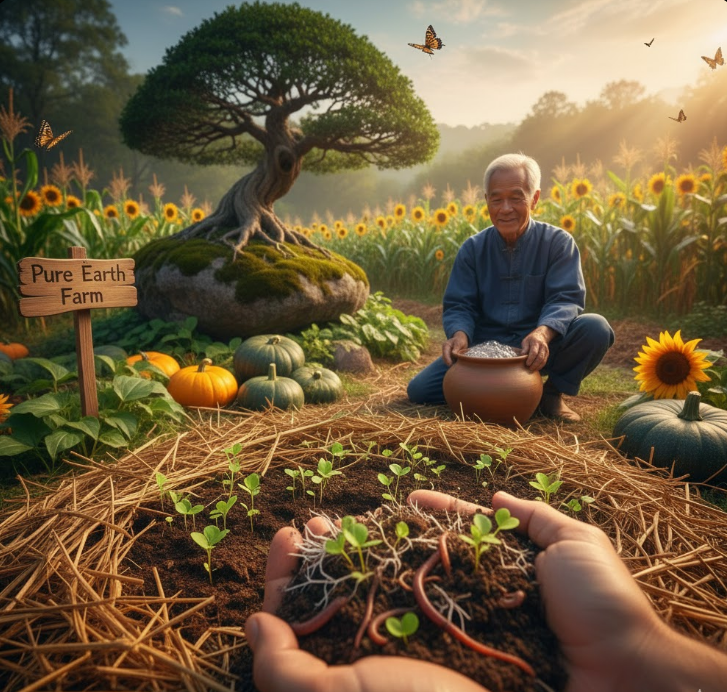
Are you tired of endless weeding, constant tilling, and worrying about what chemicals are seeping into your food and soil? Imagine a garden that thrives with minimal effort, where nature does most of the work for you. Welcome to Natural Farming (NF), a revolutionary yet ancient approach championed by the legendary Masanobu Fukuoka. This isn’t just about growing food; it’s about cultivating harmony with the earth.
In 2026, with rising concerns about soil health, chemical pollution, and food costs, natural farming (often called Zero Budget Natural Farming or ZBNF, popularized by Subhash Palekar) is gaining huge popularity. It’s a completely chemical-free way to grow plants by working with nature instead of against it.
natural farming principles can supercharge your results—healthier roots, vibrant leaves, and resilient plants without spending on fertilizers or pesticides. This isn’t just “organic gardening”—it’s a deeper commitment to letting nature lead.
What Exactly is Natural Farming?
Natural farming is a low-input, sustainable method that eliminates all external chemical and even most purchased organic inputs. Pioneered by thinkers like Masanobu Fukuoka in Japan and Subhash Palekar in India, it treats the farm or garden as a self-sustaining ecosystem.
The core idea is simple: “The soil is alive.” Our goal is to feed the microbes, and they’ll feed your plants. This means no synthetic fertilizers, pesticides, or even store-bought compost/manure. Everything comes from your own land or very minimal local resources, fostering a closed-loop system.
The Four Core Principles of Natural Farming (The "Four Wheels" of ZBNF)
1. Mulching (Acchadana):
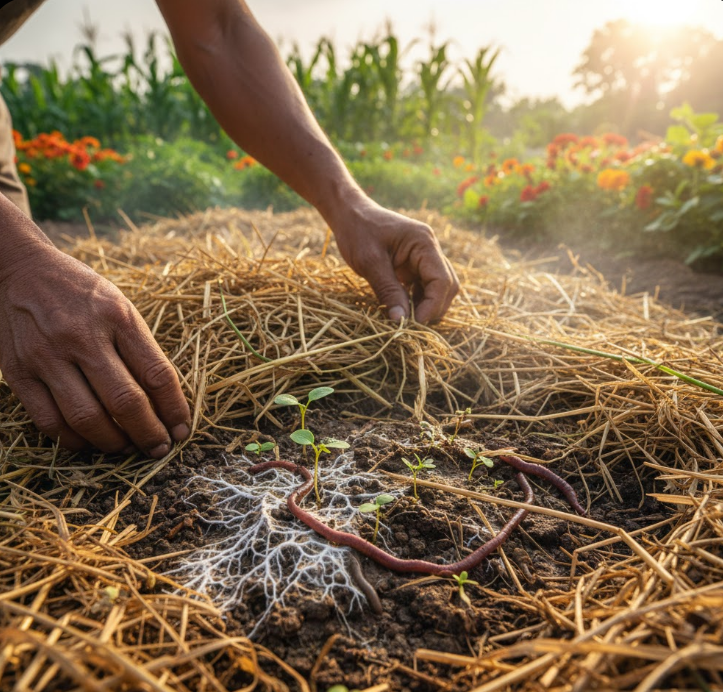
Cover your soil with organic matter like straw, leaves, or grass clippings. This acts as a protective blanket, retaining moisture, suppressing weeds, and building fertility as it slowly decomposes. This is crucial for fostering healthy soil microbiology.
2. Moisture Conservation (Waaphasa) & No Tillage:
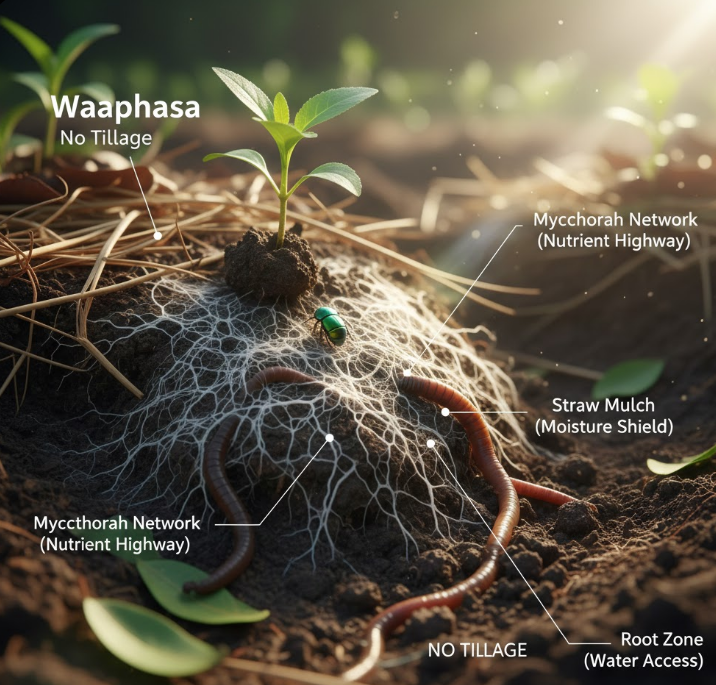
Keep your soil aerated and moist through minimal watering and no tillage. Digging disturbs the delicate fungal networks (mycorrhizal fungi) and earthworm tunnels that plants rely on for nutrients and water. Focusing on deep root growth naturally enhances water retention.
3. Multi-cropping & Biodiversity:
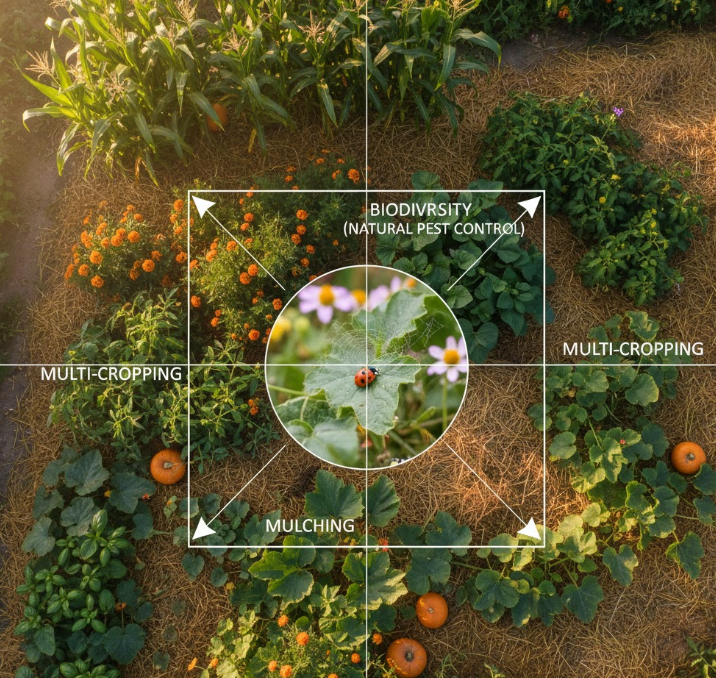
Grow a variety of plants together (companion planting) for natural pest balance, enhanced soil health, and improved nutrient cycling. This mimics a natural forest or meadow ecosystem.
4. On-farm Bio-inputs ( Jeevamrutha):
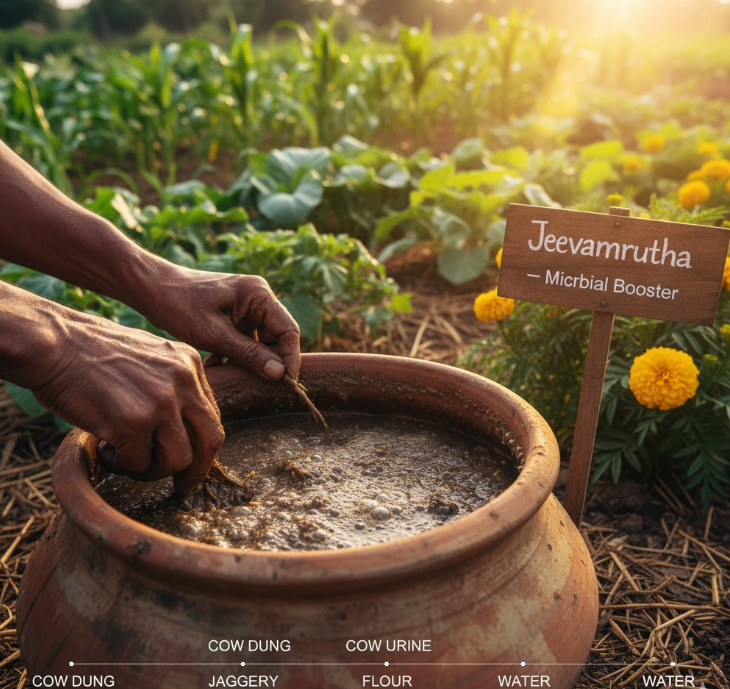
Utilize simple, homemade preparations like Jeevamrutha (a fermented mix of cow dung, cow urine, jaggery, and flour) to inoculate your soil with beneficial indigenous microorganisms (IMOs). These are low-cost or zero-cost once set up—perfect for backyard gardeners.
Natural Farming vs. Organic Farming: Key Differences
While both avoid synthetic chemicals, natural farming goes further by being “zero external input.”
| Feature | Natural Farming (NF) | Organic Farming |
|---|---|---|
| Inputs | Only on-farm (cow dung/urine, local plants, mulch) | Allows certified organic fertilizers, compost, biopesticides (often purchased) |
| Cost | Zero budget after initial setup | Often requires buying inputs |
| Philosophy | Hands-off, let nature heal soil & do the work | Active management, may use tillage or external amendments |
| Certification | Rarely certified (focus on practice) | Often certified for market |
| Soil Focus | Emphasizes indigenous microbes and no disturbance | Improves soil, but may still involve tillage |
Natural farming is like “regenerative” agriculture, but stricter—it even avoids bought organic materials to truly rely on the local ecosystem.
Benefits of Natural Farming for Your Home Garden, Lawn & Bonsai
Switching to NF brings real advantages, especially if you’re into lawn care or bonsai:
-
Healthier Soil: Teeming with earthworms and microbes for superior nutrient cycling.
-
Lower Costs: Say goodbye to fertilizer and pesticide bills—ideal for small spaces and tight budgets.
-
Resilient Plants: Stronger against drought, pests, and diseases, leading to incredible longevity for your bonsai.
-
Eco-Friendly: Reduces pollution, supports local biodiversity, and actively sequesters carbon.
-
Better Taste & Nutrition: Many report superior flavor and nutrient density in veggies and herbs.
-
Lawn & Bonsai Wins: Lush, green lawns with less water; vibrant bonsai with naturally robust root health, free from harmful chemical salts. For bonsai, specifically, encouraging indigenous microorganisms can create a miniature forest floor ecosystem, reducing the need for synthetic liquid feeds.
How to Start Natural Farming at Home (Beginner Steps)
You don’t need to overhaul everything at once—start small and observe:
-
Observe Your Space: Note your soil type, sunlight patterns, and existing plants.
-
Stop Chemicals: Gradually phase out all synthetic fertilizers and sprays.
-
Mulch Everything: Cover garden beds, lawn edges, and even your bonsai pots with leaves, straw, or grass clippings.
-
Make Simple Inputs: Try making Jeevamrutha if you have access to cow products. If not, start with simple compost tea as a bridge.
-
Plant Diversity: Add companion plants (e.g., marigolds with vegetables) to attract beneficial insects and deter pests naturally.
-
Water Wisely: Opt for deep, infrequent watering to encourage deep root growth.
-
Be Patient: Your soil may take 1–2 seasons to fully regenerate, but yields and plant health will improve dramatically over time.
Final Thoughts: Is Natural Farming Right for You?
If you want healthier plants, lower costs, and a deeper, more harmonious connection to nature, then yes—especially if your site already covers gardening topics. It’s not a quick-fix, but the long-term rewards are immense for your garden, your wallet, and the planet.
Ready to dive deeper? Discover how modern technology transformed the “Iron Harvest” and contrasts sharply with these methods in our next post: The Iron Harvest: How Industrialization Redefined the Way the World Eats.
Have questions or tried natural methods? Drop a comment below! Explore more on bonsai life, lawn care, and gardening tips on our site.
Start today—your soil is waiting to come alive!