Industrial Agriculture Impact on Food & Land

Explore the rise of Industrial Agriculture, its efficiency, and environmental costs. Understand modern farming’s impact and how it contrasts with natural methods.

How Industrialization Redefined the Way the World Eats

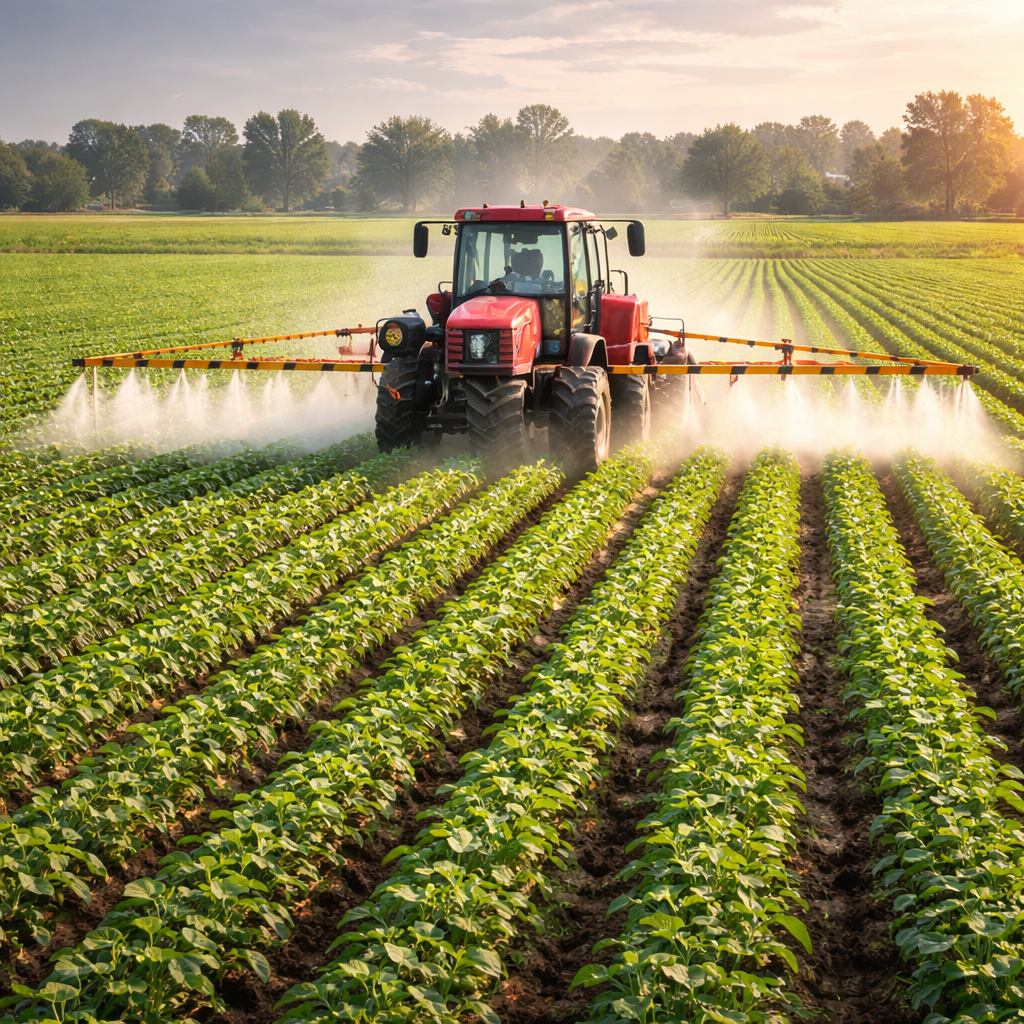
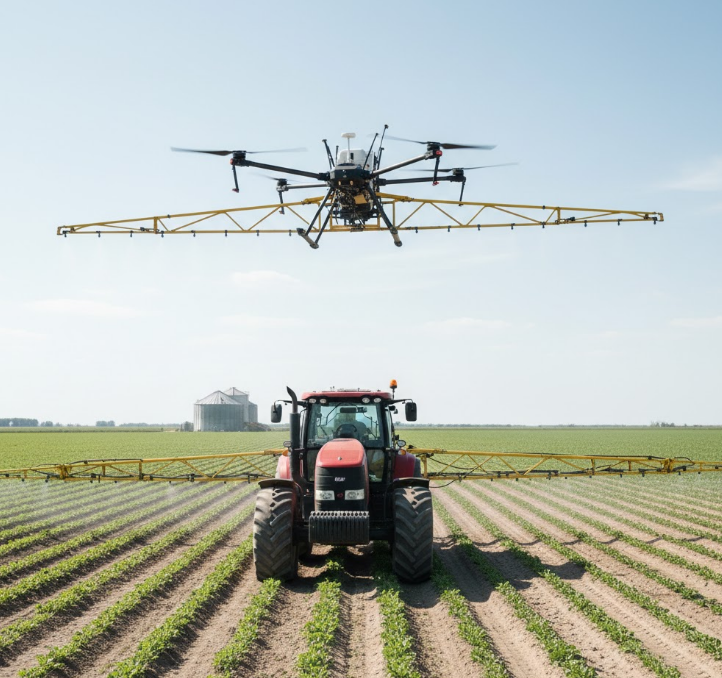
From vast monoculture fields stretching to the horizon to high-tech drones surveying every crop, modern agriculture is a marvel of human ingenuity. But at what cost? This compelling read pulls back the curtain on Industrial Agriculture, exploring how our pursuit of efficiency and scale reshaped not just our food systems but the very land beneath our feet.


In the last century, farming moved from the backyard to the laboratory. This profound shift allowed us to feed billions and create unprecedented abundance, but it changed our relationship with the earth forever. If you’ve ever wondered how your food truly gets from the farm to your plate, or how traditional natural farming methods contrast with today’s mega-farms, this in-depth analysis offers a fascinating, critical look at the systems that feed our world.

The Pillars of Industrial Farming: Efficiency at Scale

Industrial agriculture is built on principles designed to maximize output, often prioritizing quantity and consistency over natural harmony.

Monoculture: The One-Crop Reign

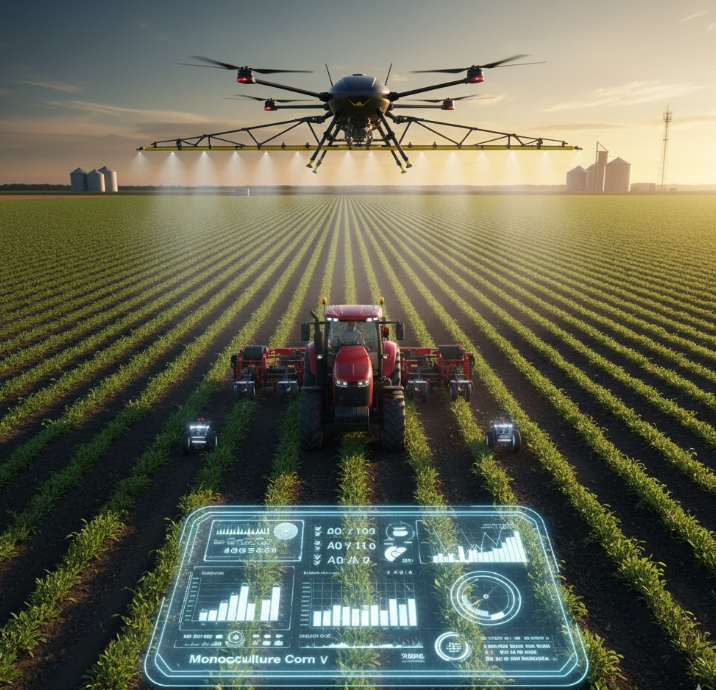
Instead of diverse fields, industrial farms often grow a single crop (like corn, soy, or wheat) across thousands of acres. This allows for specialized machinery, streamlined planting, and simplified harvesting, driving incredible efficiency. However, it also creates vast tracts of land vulnerable to single pests or diseases.

Chemical Intervention: The Nutrient & Pest Fix

The reliance on synthetic NPK (Nitrogen, Phosphorus, Potassium) fertilizers provides quick, targeted nutrient boosts, forcing rapid growth. Similarly, chemical pesticides and herbicides are deployed to control pests and weeds efficiently across large areas, replacing natural ecological balances.

The Ag-Tech Revolution: Data-Driven Farming

Modern industrial farming is a high-tech endeavor:

  • Precision Farming: Using GPS, drones, and satellite imagery to monitor every inch of soil and apply resources exactly where needed.

  • Genetic Engineering (GMOs): Developing crops specifically designed to resist pests, withstand herbicides, or tolerate harsh conditions, ensuring higher yields.

  • Automation: From robotic planters to automated irrigation systems, technology minimizes human labor and maximizes efficiency.

The Cost of Efficiency: What We Gained, What We Lost

While industrial agriculture has achieved unprecedented food production, it has not come without significant trade-offs:

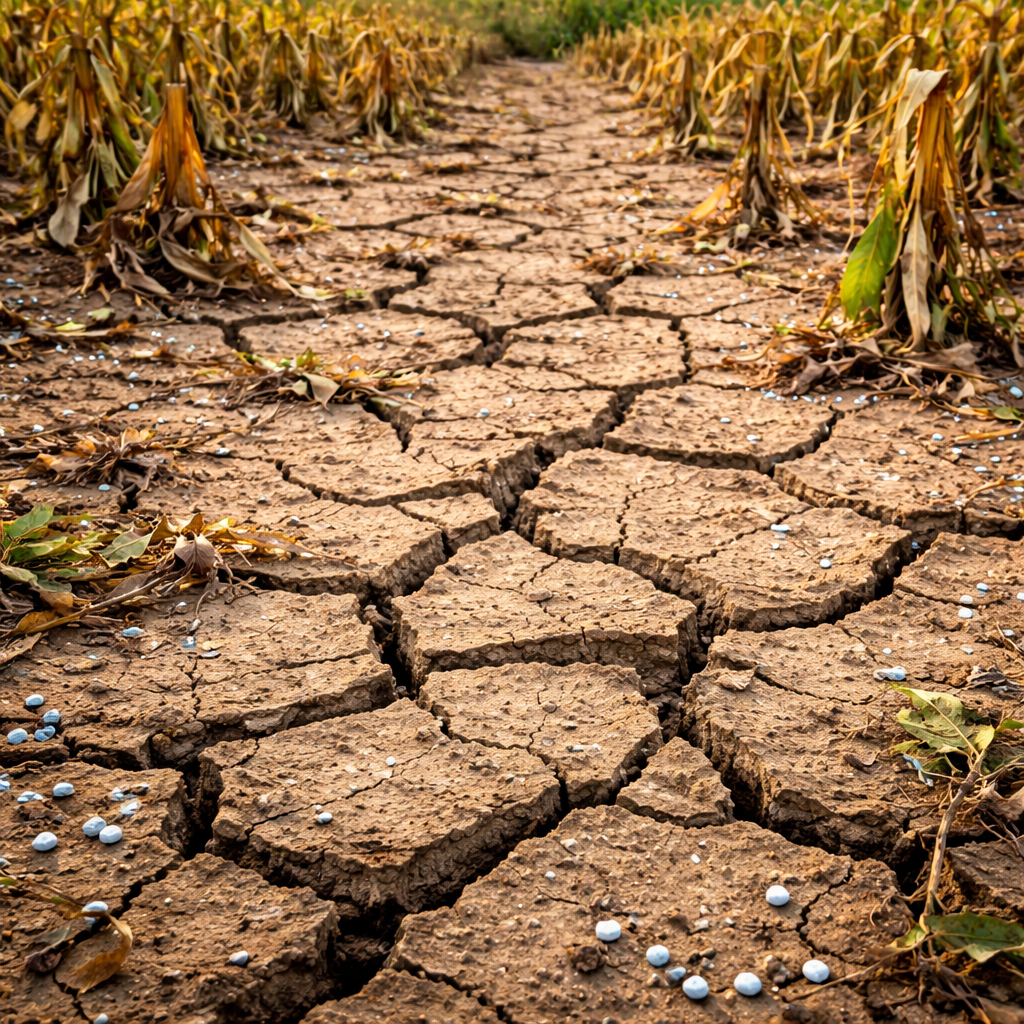
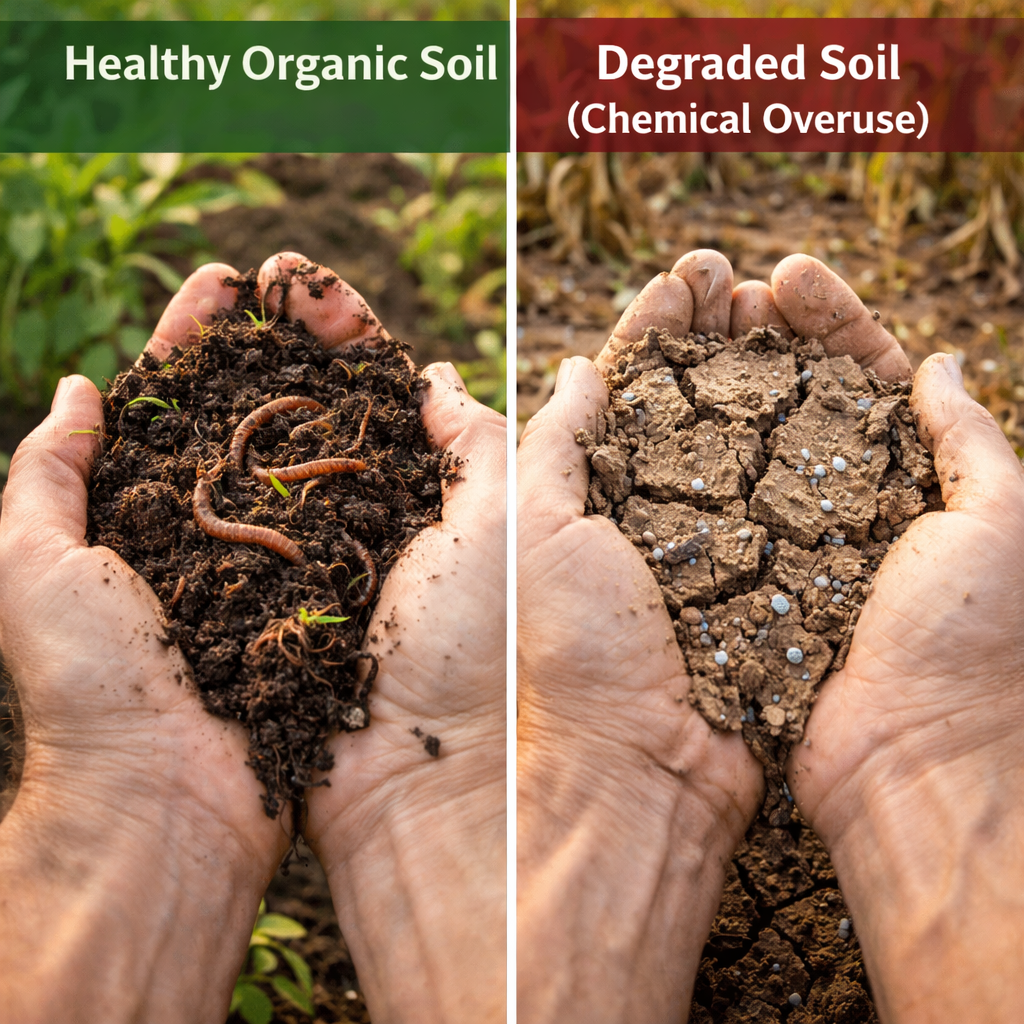
  • Soil Depletion: Continuous tilling and heavy chemical use can degrade soil structure, reduce organic matter, and deplete vital microbial life, turning fertile land into inert dust.

  • Biodiversity Loss: Monoculture reduces habitat for wildlife and eliminates local seed varieties, making ecosystems more fragile.

  • Water & Energy Usage: Industrial processes, from fertilizer production to irrigation for vast fields, are highly energy and water-intensive.

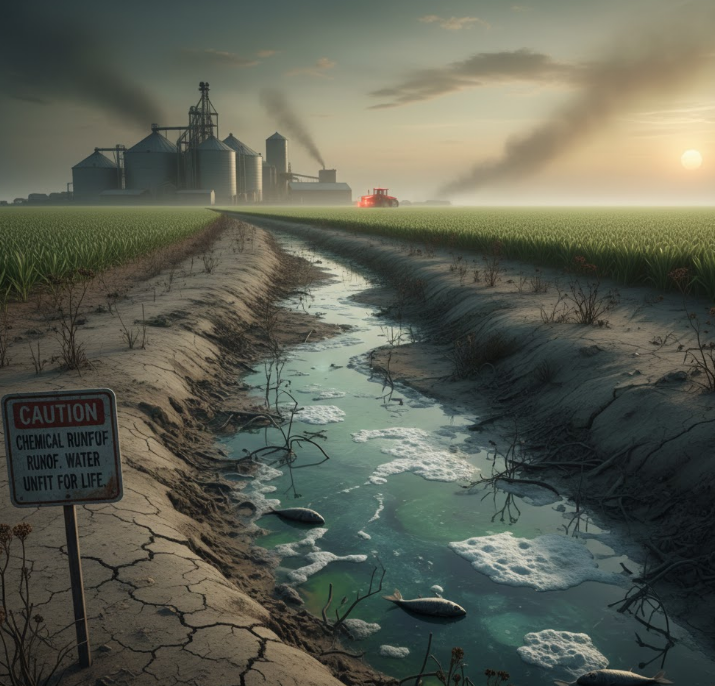
  • Chemical Runoff: Pesticides and excess fertilizers can leach into groundwater and waterways, impacting surrounding ecosystems and human health.

Overusing chemical fertilizers in farming can:

  • Damage soil microbes

  • Cause weak plant growth

  • Increase pest problems

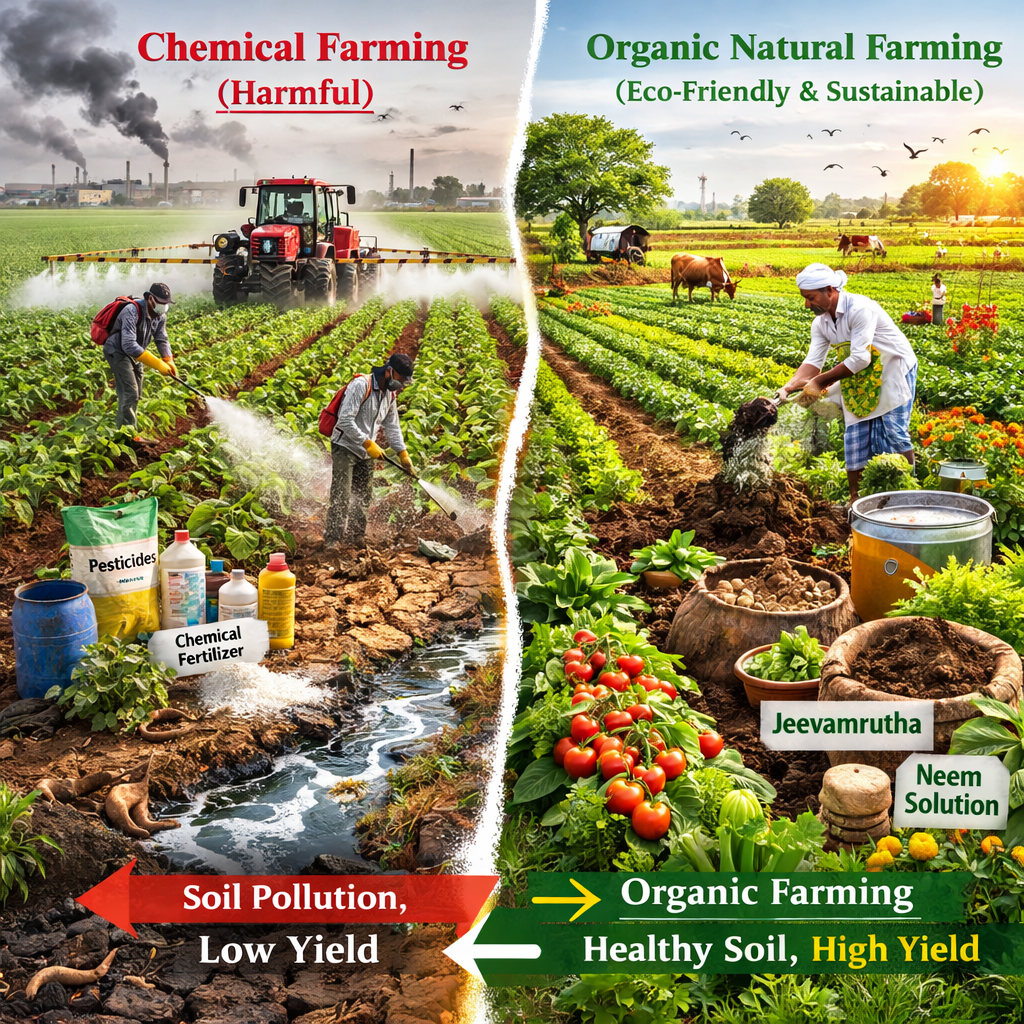
Switching to natural methods restores balance and improves plant health.

Natural Farming
Industrial Farming
Chemical-freeChemical-dependent
Improves soil healthDepletes soil fertility
Low-cost inputsHigh investment
SustainableShort-term productivity focus

Finding the Balance in a High-Tech World

Industrial agriculture has undeniably shaped our modern world, providing an unprecedented abundance of food for a rapidly growing global population. However, as we have seen, this “Iron Harvest” comes with a heavy price tag: the depletion of our soil’s vitality, the loss of biodiversity, and a growing disconnect from the natural cycles that sustain us. Even in our own backyards, the temptation to “industrialize” with quick chemical fixes and automated gadgets often overrides the slow, soulful process of nurturing a living ecosystem. As we move through 2026, the challenge is not to reject technology entirely, but to use our modern intelligence to support—rather than dominate—nature. Whether you are a commercial farmer or a weekend gardener, the goal remains the same: to move past the biological machine and return to a system that prioritizes long-term sustainability over short-term yield. The future of our food and our land depends on finding that harmony between the efficiency of the machine and the soul of the soil.

Leave a Comment

Your email address will not be published. Required fields are marked *